The international project OCEAN:ICE “Ocean-Cryosphere Exchanges in Antarctica: Impact on Climate and the Earth Systems” has been completed. It was implemented with the participation of Ukrainian scientists over a period of two years as part of the Horizon Europe program.
The main goal of the project was to assess the processes occurring on the Antarctic ice sheet and in the Southern Ocean under climate change conditions. The study involved 18 partners, including the National Antarctic Scientific Center, and was coordinated by the Danish Meteorological Institute (DMI).
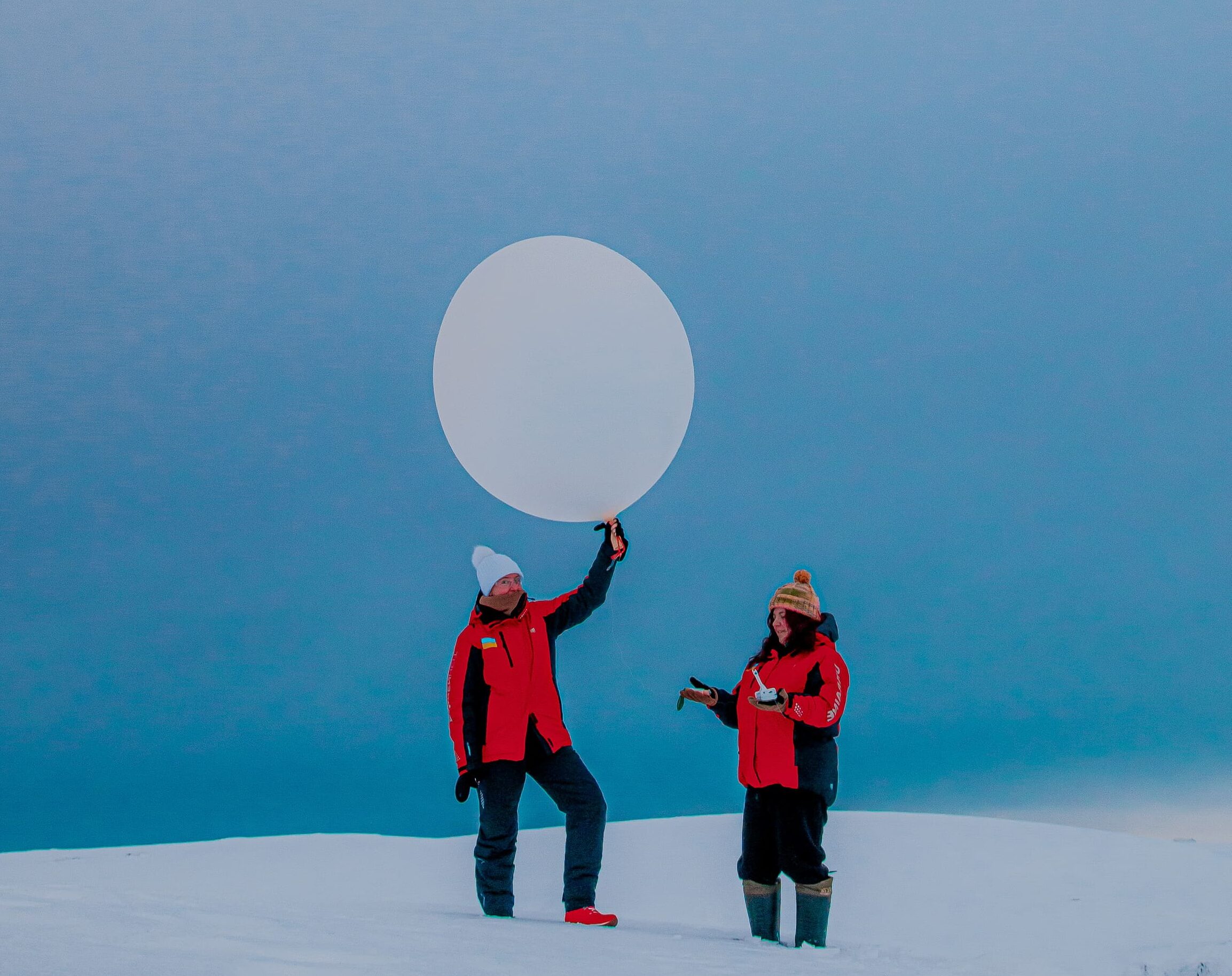
As part of the project in 2025, 59 radiosondes were launched at Vernadsky base under extreme meteorological conditions. These are special sensors that are lifted by helium balloons to about 20 km in altitude to measure a range of parameters, transmitting the data via satellite to scientists. This allowed the collection of new data on the impact of atmospheric rivers on the ice cover.
Atmospheric rivers are narrow bands of air that quickly transport heat and moisture from the tropics to Antarctica. They lead to increased precipitation and a sharp rise in air temperature in polar regions. Due to this phenomenon, a record temperature of +12.7°C was recorded at Vernadsky base in February 2022. This phenomenon accounted for 50–70% of all extreme precipitation in the region.
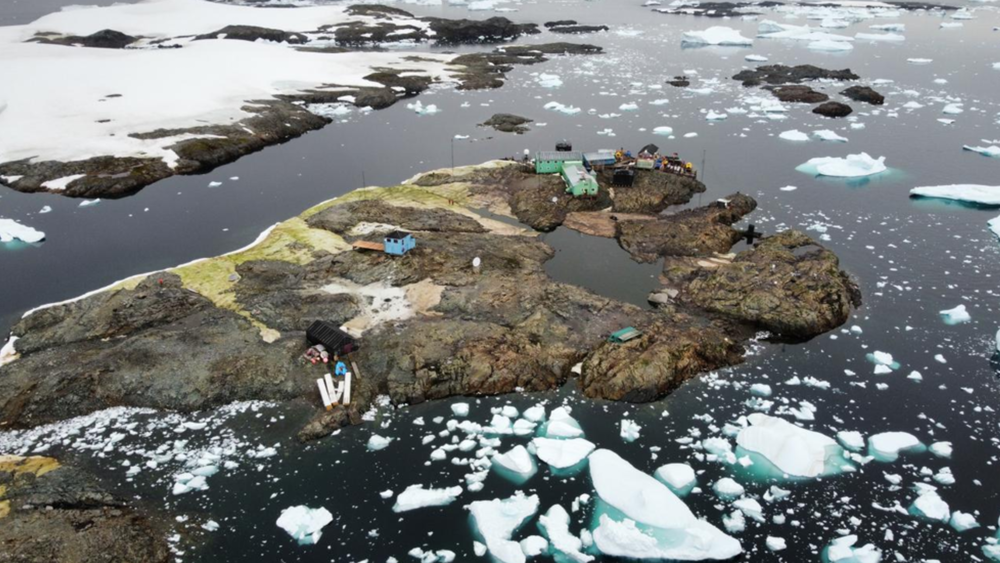
Data from 2025 showed that the number of recorded atmospheric rivers near our station is increasing. On Galindez Island, where Vernadsky base is located, they cause extraordinary snowfalls. Meanwhile, on the opposite side of the mountains, it’s as if a huge hairdryer is turned on: the air temperature rises sharply, and it becomes drier as it descends from the mountains. Similar atmospheric processes became critical for the disintegration of the Larsen A (1995) and Larsen B (2002) glaciers, posing a threat to the collapse of new glaciers.
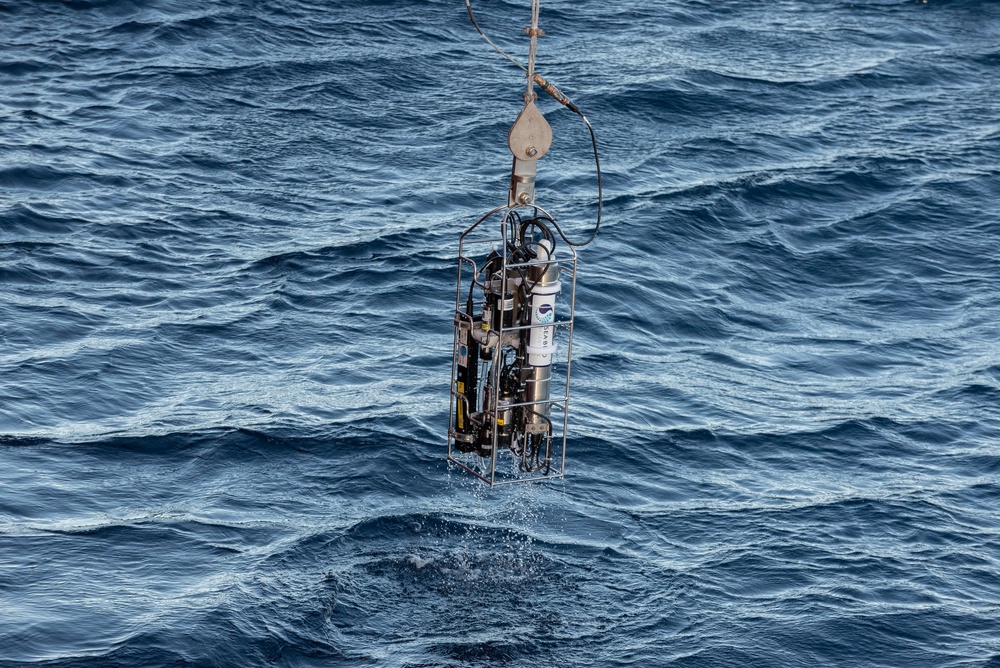
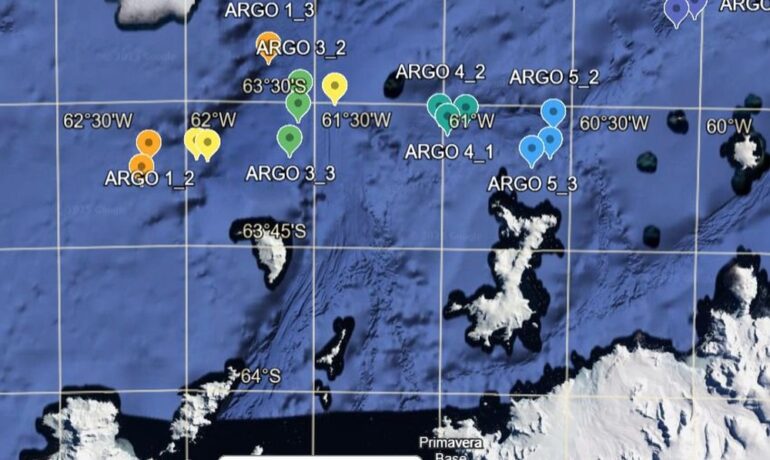
At the same time, Ukraine launched six Argo buoys in the Bransfield Strait of the Southern Ocean for the first time. As a result, year-round data on changes in temperature and salinity of ocean waters at varying depths throughout the year were obtained for the first time.
Observations showed that the Bransfield Strait is changing faster than climatologists had previously thought:
– The surface water temperature is rising. Summer surface water temperatures have reached approximately +2°C, compared to +1.7°C for the average data of the past 30 years. Deep waters in the western part of the strait were 0.5°C warmer than climatological averages.
– Salinity is decreasing. At a depth of 400 m, the water is significantly less saline compared to historical observations.
– The boundary where waters from the eastern part of the strait, from the Weddell Sea and the western part of the peninsula, meet is moving seasonally and is not stable, as scientists had previously believed. Further study of this dynamics will allow for a better understanding of nutrient distribution, ecosystem viability, and heat transfer in the Southern Ocean.
Monitoring the melting regime of the Antarctic ice sheet and changes in the Southern Ocean is an important contribution to climate predictions regarding future sea-level changes. This is essential for assessing risks: how the loss of Antarctic ice will affect coastal communities worldwide and our planet as a whole.
For more details read our policy brief (in English).