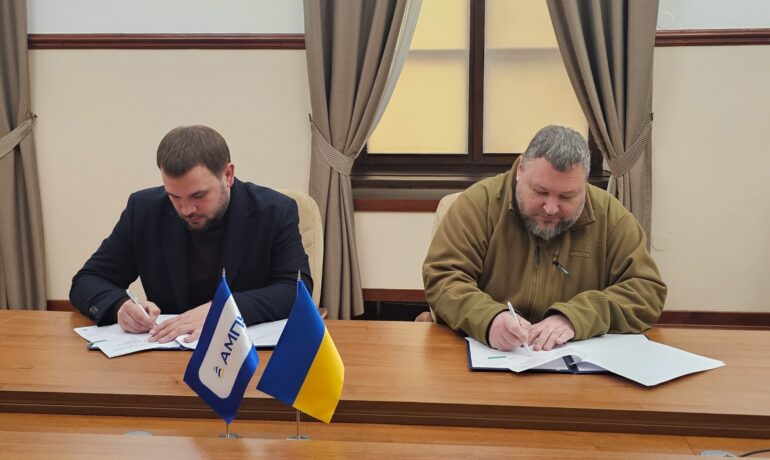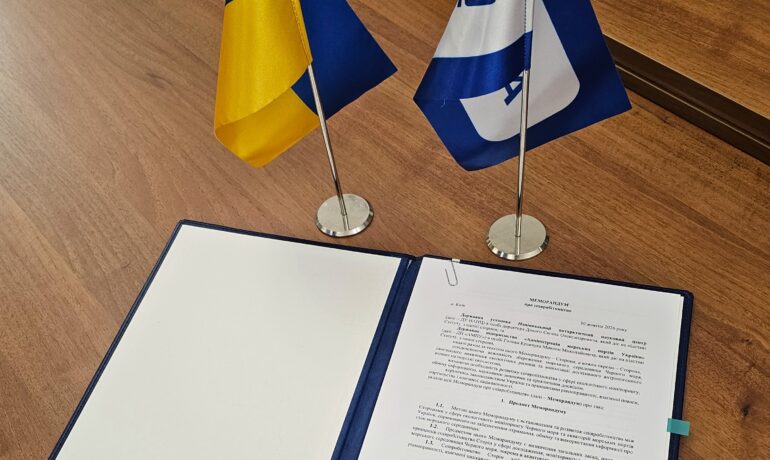
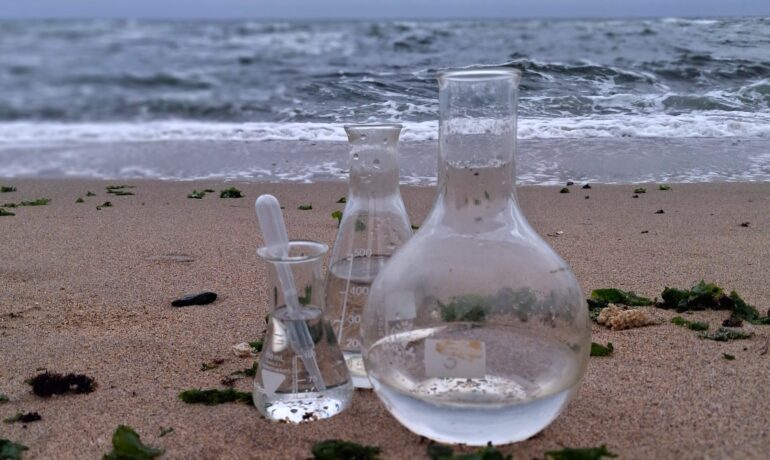
Ukraine is set to expand its environmental monitoring of the Black Sea, which has been severely restricted due to Russia’s full-scale invasion. New opportunities will emerge through cooperation between the National Antarctic Scientific Center (NASC) and the Ukrainian Sea Ports Authority (USPA). The two organisations signed a memorandum of understanding today, 30 October 2026, ahead of Black Sea Day.
This cooperation will make it possible, for the first time since the start of the full-scale war, to establish regular environmental monitoring along the Black Sea coast, from the Dnipro-Buh Estuary to the Danube Delta.
“Russia’s invasion has severely restricted access to the sea and, consequently, our ability to collect samples. Under this cooperation, the USPA is expected to organise water sampling in port waters, while NASC will analyse the samples for a range of physicochemical and biological parameters. Together, we will be able to obtain a more comprehensive picture of the environmental state of Ukraine’s part of the Black Sea,” said Evgen Dykyi, Director of NASC.
“We have extensive experience in monitoring the waters of seaports, detecting pollution and responding to such incidents. Combining the USPA’s practical expertise with NASC’s scientific capabilities will enable us to expand systematic environmental monitoring of the Black Sea and obtain up-to-date information on its condition. This is particularly important during wartime, when environmental risks to the Black Sea have increased significantly,” noted Mykola Kravchuk, Head of the Ukrainian Sea Ports Authority.
The next step will be to agree on sampling locations and frequency, as well as the environmental parameters that can be measured.
The memorandum will remain in force until the end of 2027, with the possibility of automatic renewal.
Background. In May this year, the Ukrainian Scientific Center for Ecology of the Sea (UkrSCES) became part of the National Antarctic Scientific Center. This marked the first step towards establishing a unified national centre for marine and polar research. As a result, marine environmental monitoring and Black Sea research became additional areas of NASC’s activities.
Photos: Olena Hyriaieva, Andrii Titiapkin, Vladyslav Ponomarenko