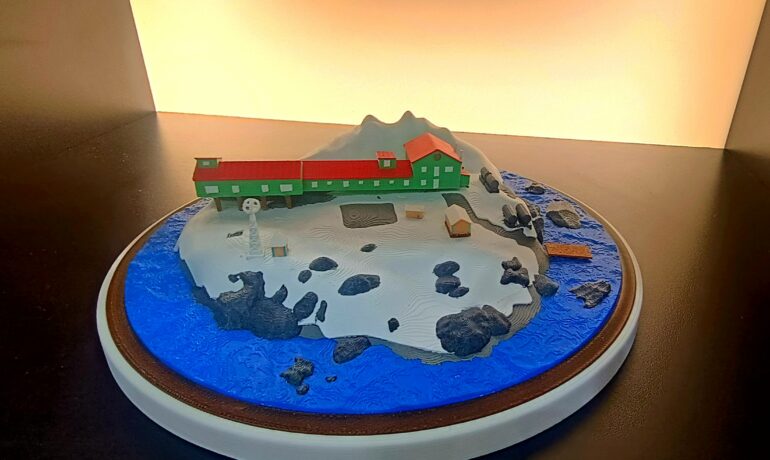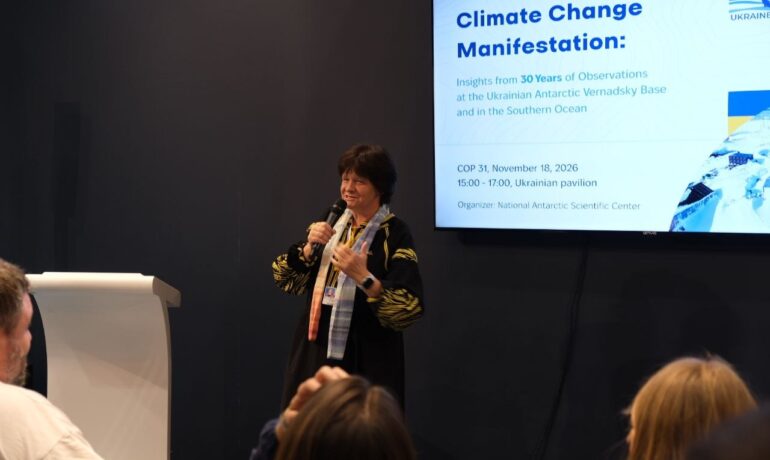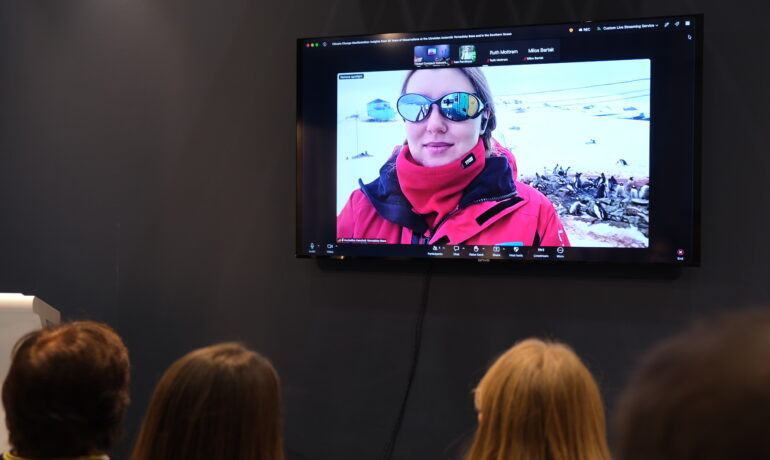

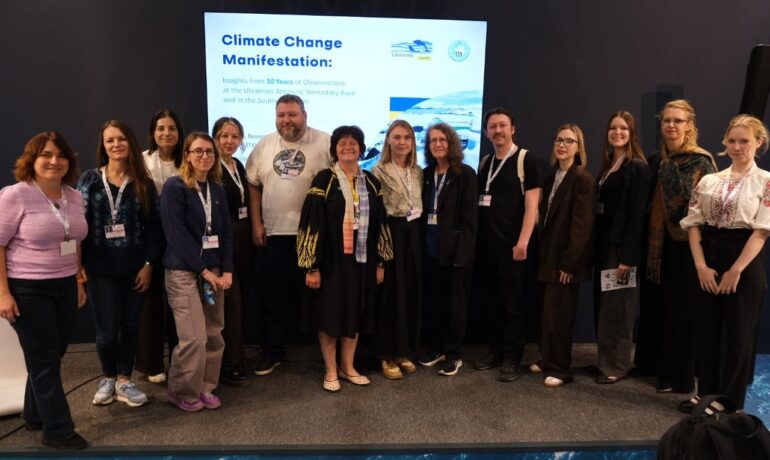
How is the climate changing around Akademik Vernadsky Station, and what does this mean for local plants and animals? These questions were discussed at the Ukrainian Pavilion during the 31st Conference of the Parties to the United Nations Framework Convention on Climate Change (COP31) in Antalya.
Scientists from Ukraine’s National Antarctic Scientific Centre (NASC) and colleagues from Denmark, Czechia, and France presented findings from their observations.
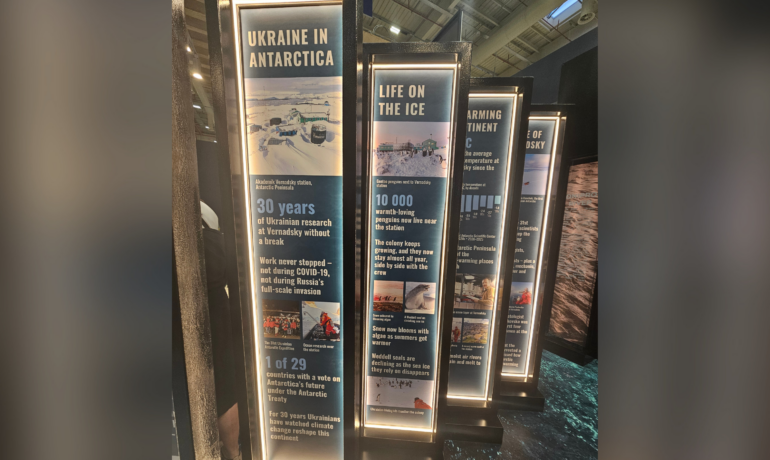
- Rising air temperatures. Weather observations at the station have been continued for nearly 80 years. Over that period, the mean annual air temperature has risen by more than 3°C.
- Declining sea ice cover and freshening of the Southern Ocean. During the Antarctic winter, sea ice used to surround Galindez Island, home to Vernadsky Station. In recent years, ice has covered only small parts of the surrounding waters. In some years, such as 2023, it did not form there at all. A decline in seawater salinity was also recorded as part of the OCEAN:ICE project.
- The greening of Antarctica. Around Vernadsky Station, the area covered by mosses, lichens and two species of flowering plants has expanded considerably and continues to grow.
- Shifts in animal populations. The number of gentoo penguins, which favour milder conditions, continues to rise on Galindez Island. Last season, there were more than 10,000. With less sea ice, the penguins can feed on krill in the waters around the island almost year-round. For Weddell seals, shrinking sea ice means losing places where they give birth and nurse their pups.
During the event, NASC Director Evgen Dykyi signed the international declaration “Sustaining the Global Climate Observing System.” The initiative aims to secure political and financial support to keep climate observations going worldwide.
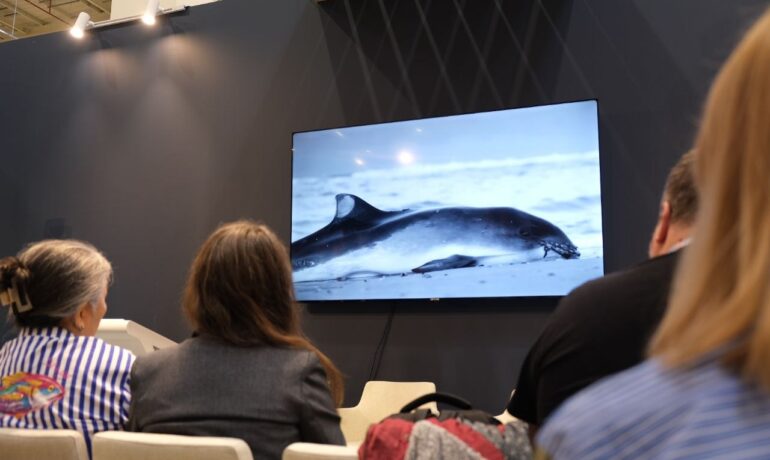
At a separate event, NASC experts also joined a discussion on emerging threats to cetaceans worldwide. Participants mapped the threats together and ranked military activity as the most significant by a wide margin.
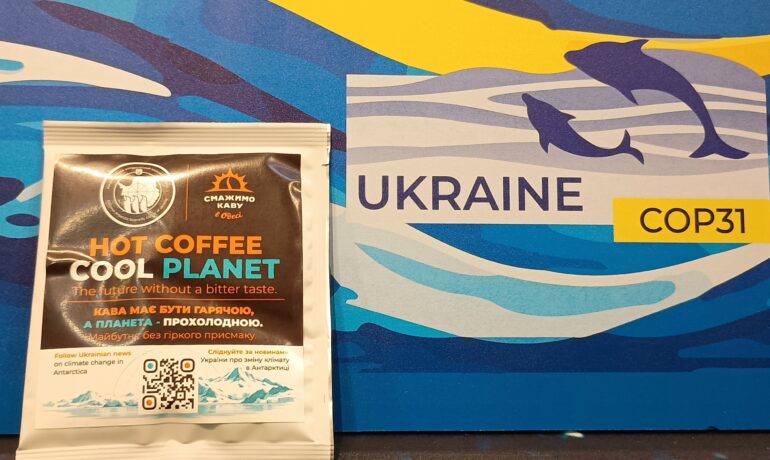
The Ukrainian team prepared small gifts for their international colleagues: drip coffee sachets from the café “Smazhymo kavu v Odesi.” Each sachet carried the message “Hot coffee. Cool planet. A future without a bitter taste.” It was a reminder that policy decisions grounded in scientific evidence can help mitigate global warming.
The UN climate conferences typically bring together representatives from virtually every country. They agree on joint action to reduce greenhouse gas emissions, adapt to the impacts of climate change and finance these efforts.
Photo credits: Karina Vyshniakova, Pavlo Goldin and Valentyna Khopta.