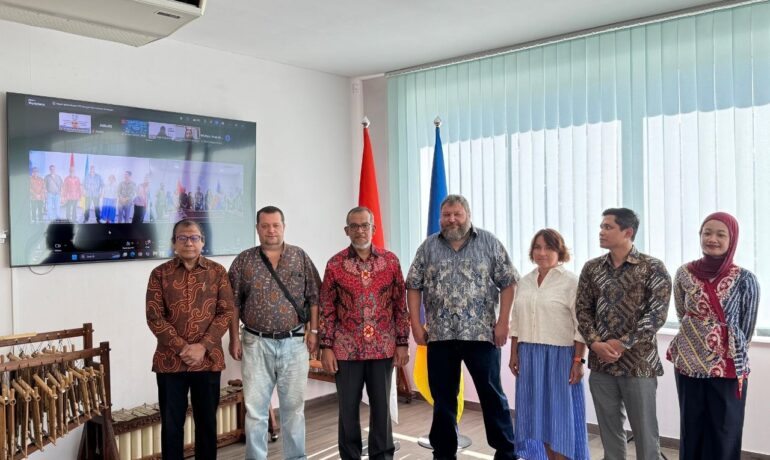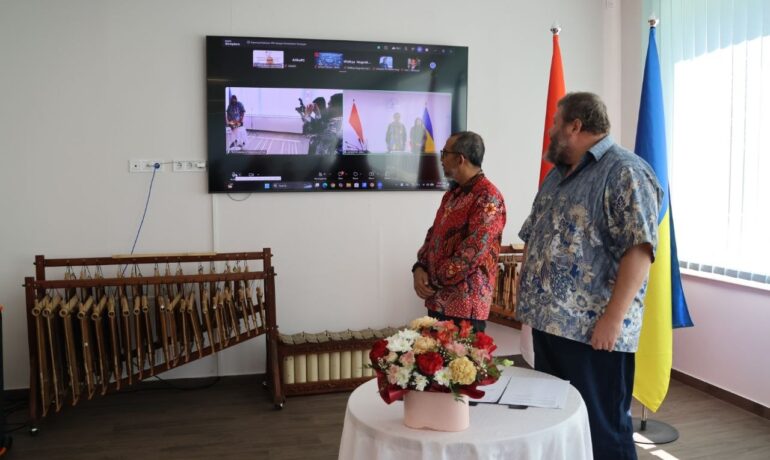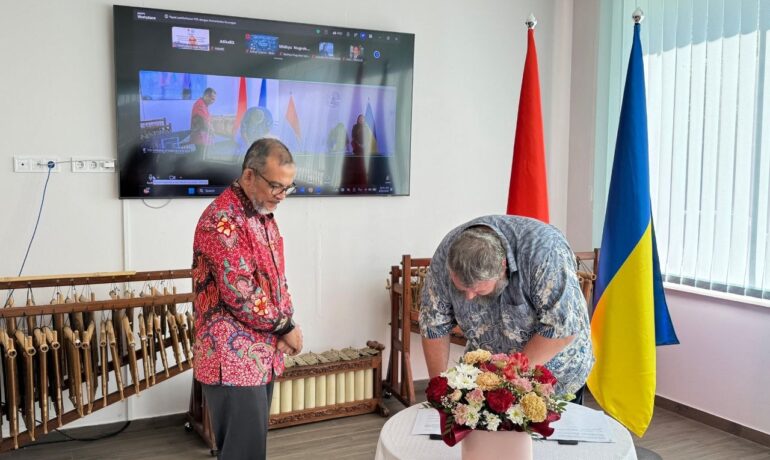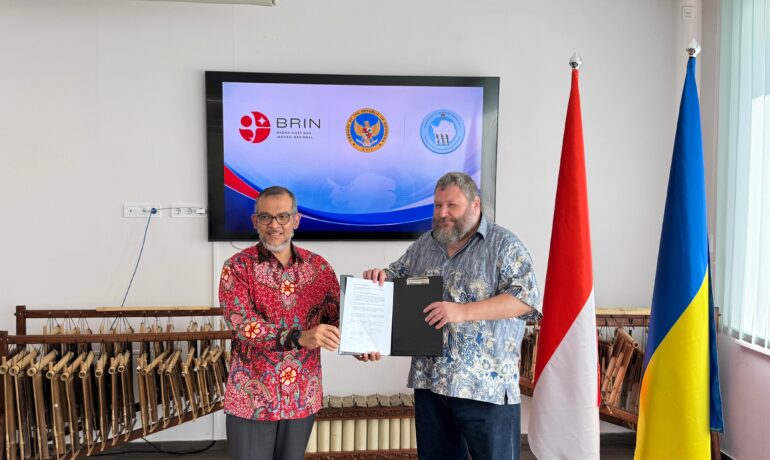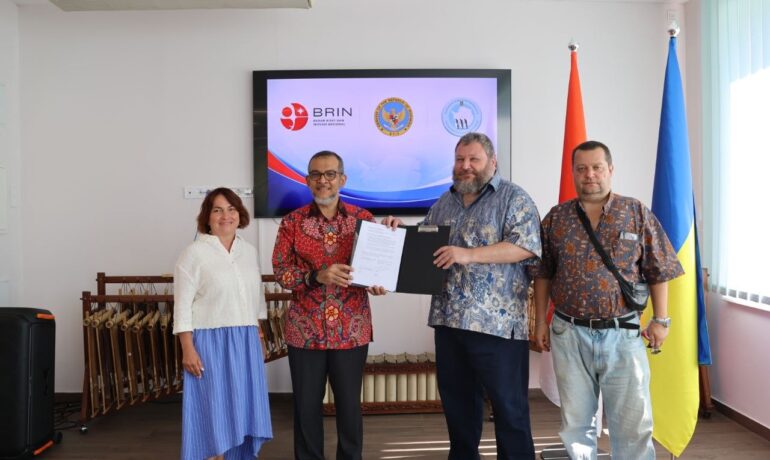
Ukraine and Indonesia will conduct Antarctic and tropical research together. This is outlined in the Agreement concerning Scientific and Technical Cooperation signed today, August 20, 2026, between the National Antarctic Scientific Center (NASC) and the National Research and Innovation Agency of the Republic of Indonesia (BRIN).
The online document was signed by NASC Director Evgen Dykyi and Deputy Chairman for Development Policy Prof. Dr. R. Nunung Nuryantono
The Agreement covers collaboration in the following areas:
- Global interconnections between the atmosphere of Antarctica, the Southern Ocean, the tropics, and global climate change.
- Geological structure and composition of geological formations in tectonically active regions.
- Biodiversity and adaptation of marine and terrestrial organisms to extreme environmental conditions—from low temperatures and high levels of ultraviolet radiation in Antarctica to active volcanism in the tropics.
- Bioprospecting—searching for and investigating biologically active substances and promising genes for biotechnology in extremophilic organisms.
- Space weather, and more.
For Indonesia, which declared its intention to join the Antarctic Treaty last year, the Agreement opens up opportunities to work in this region, including conducting joint field research at the Ukrainian station “Akademik Vernadskyi” and the ice class research vessel “Noosfera.”
In the long term, this could facilitate Indonesia’s establishment of its own scientific station in Antarctica (a similar path has been followed by the Turkish Antarctic program starting at Vernadsky base and the Mexican program has begun since last season).
For Ukraine, this presents an opportunity not only to expand international cooperation in Antarctic research but also to engage in work in tropical regions alongside Indonesian colleagues, using BRIN’s scientific infrastructure and expertise.
“Equatorial and polar regions of the Earth may seem maximally contrasting, but they are closely interconnected. Atmospheric rivers formed over Indonesia are melting the glaciers of the Antarctic Peninsula. The Southern Ocean’s connection with other oceans supports the global circulation of currents—this very circulation significantly affects, among other things, the climate of Ukraine. The combined efforts of Ukrainian Antarctic researchers and our colleagues living and working directly at the equator will allow for a more comprehensive understanding of the functioning of overall planetary processes,” noted NASC Director Evgen Dykyi.
The Agreement is active for five years with the possibility of extension. Meanwhile, the first joint Antarctic projects will begin in December: Indonesian scientists will start field studies at Vernadsky base and r/v “Noosfera.”
We will provide additional information on specific projects and cooperation results. Meanwhile, we congratulate Ukraine and Indonesia on this new opportunity to jointly explore our common and very vulnerable planet—from the equator to Antarctica.
Photo: Embassy of the Republic of Indonesia in Ukraine