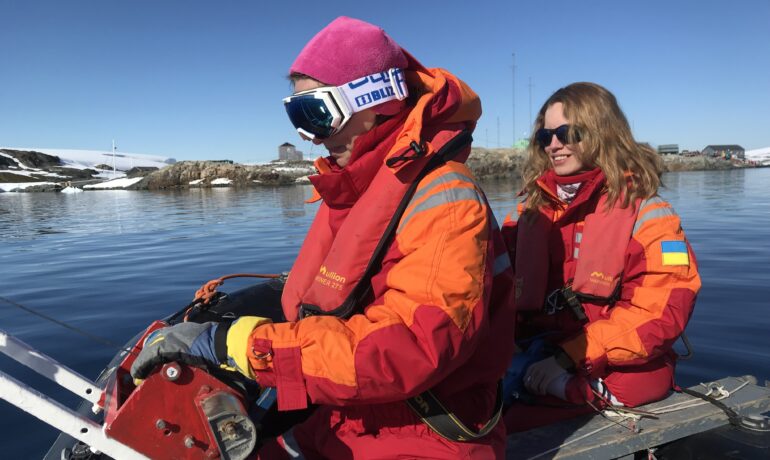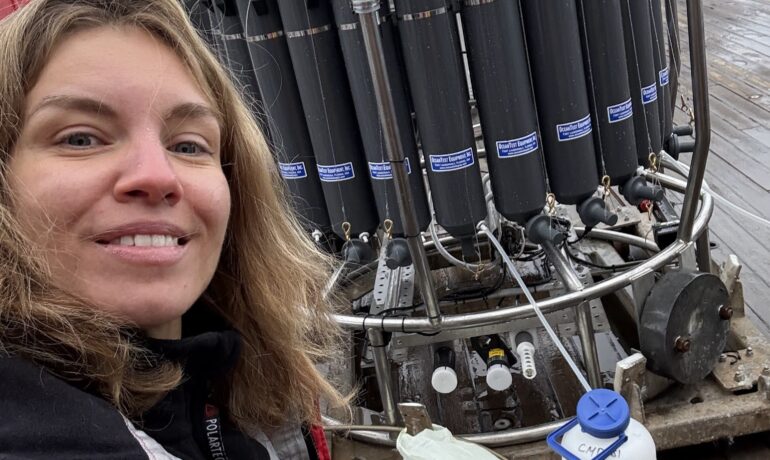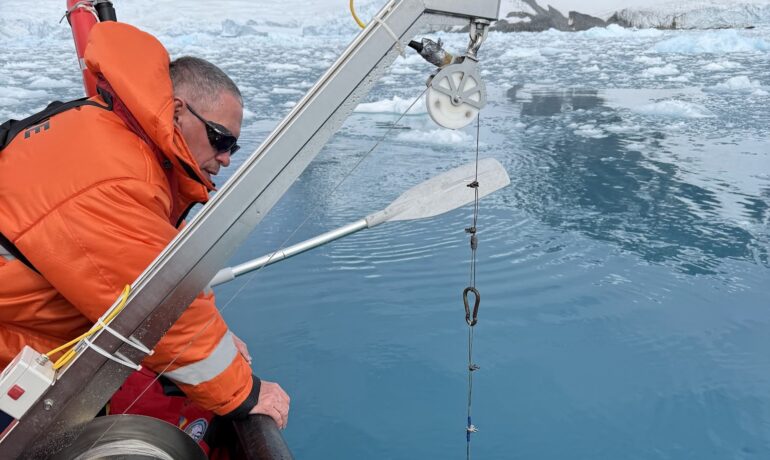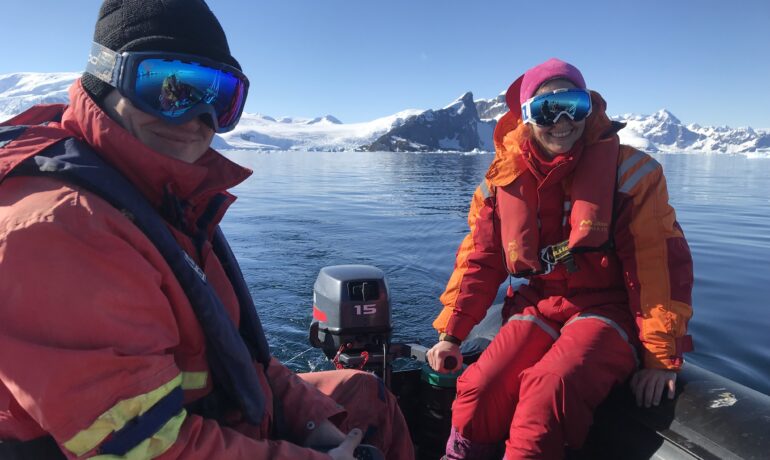
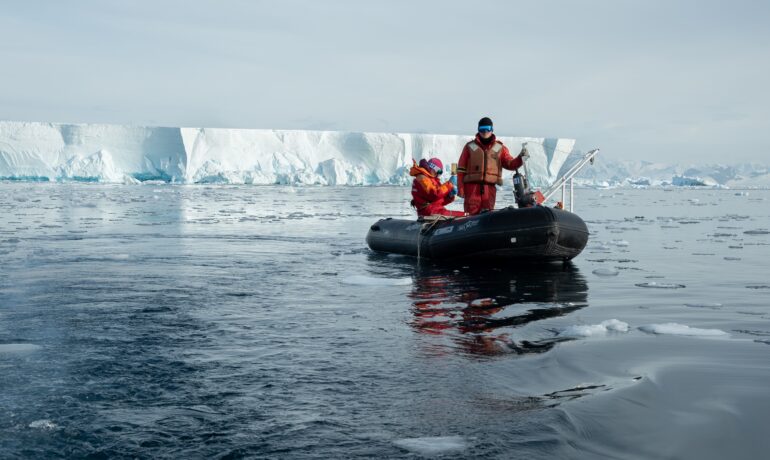
Important result of our biologists’ multi-year research! In collaboration with international colleagues, they have found that microorganisms in the Southern Ocean have more complex connections and interaction mechanisms than previously thought. This will allow for a better understanding of ocean processes under the influence of climate change.
The research results were recently presented in the well-known international journal of the Federation of European Microbiological Societies (FEMS), Microbiology Ecology in the article “Phytoplankton dynamics shape bacterioplankton community structure and metabolism during the austral summer-autumn transition in the Western Antarctic Peninsula”.
This is one of the leading journals in microbial ecology, publishing work that shapes current understanding of how microbial communities function in nature. Publication here attests to the high quality of the research and its significant scientific contribution.
The Ukrainian authors of the article are NANS biologists: Maria Pavlovska, Yevheniia Prekrasna-Kviatkovska, Andrii Zotov, Artem Dzhulai, and Evgen Dykyi.
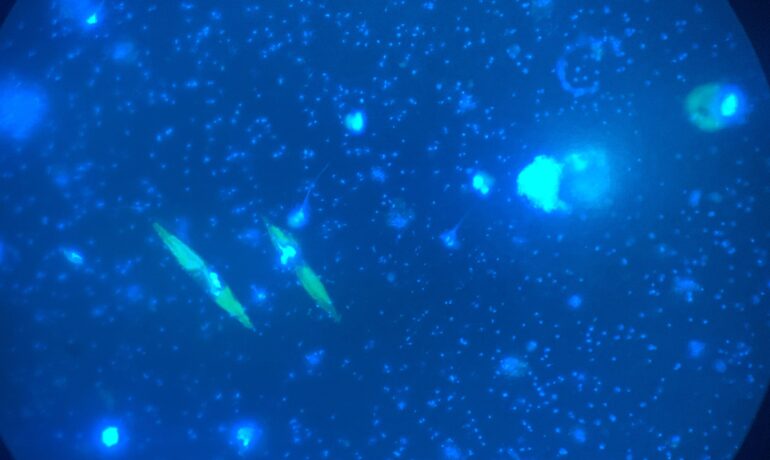
What exactly was studied? The work focused on the interaction mechanisms between phytoplankton (microalgae) and bacteria in polar marine ecosystems.
The Southern Ocean is known to play a key role in the global carbon cycle, which influences the planet’s climate. The main regulators of this cycle are microalgae and bacteria: the former fix CO2 through photosynthesis and produce oxygen, while the latter decompose organic matter, releasing CO2 and recycling nutrients. Understanding the balance between these processes is crucial, because interactions between bacteria and algae determine the structure of marine food webs — from small zooplankton to fish and whales.
In addition to oxygen, some microalgae produce sulfur-containing compounds that lead to the formation of dimethyl sulfide — a gas that promotes cloud formation. This reduces the amount of solar energy reaching Earth’s surface, thereby cooling it.
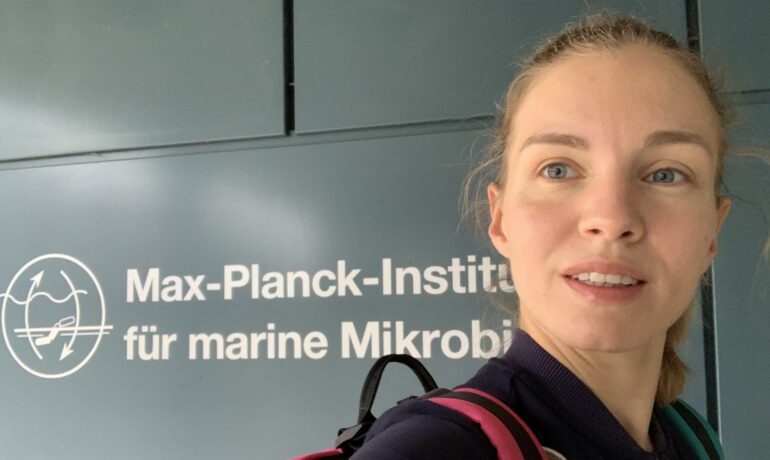
These studies were initiated in 2019, when the head of NANS’s microbiology program, Mariia Pavlovska, received a scholarship from the Scientific Committee on Antarctic Research (SCAR) to carry out the project in collaboration with scientists from the Max Planck Institute for Marine Microbiology (Bremen, Germany), a world leader in marine biology.
To clarify the role of Antarctic microorganisms, the researchers first “counted” and “cataloged” the species — identifying which groups occur under different conditions and how they relate quantitatively.
The results proved truly significant. They showed that interactions between phytoplankton and bacterioplankton in the Southern Ocean are much more complex and finely tuned than previously thought. These interactions are not merely responses to available organic carbon but rather a network of specialized functional links among groups of organisms that jointly regulate flows of carbon and sulfur-containing compounds.
Why does this matter? Climate change is leading to longer, warmer summers, which may favor phytoplankton growth. This, in turn, alters microbial communities and biogeochemical cycles on which ocean life depends.
Congratulations to our scientists on this achievement and their contribution to global science!