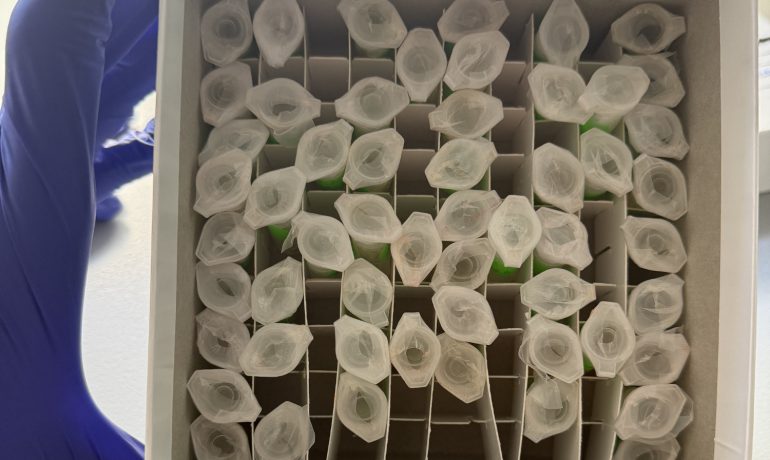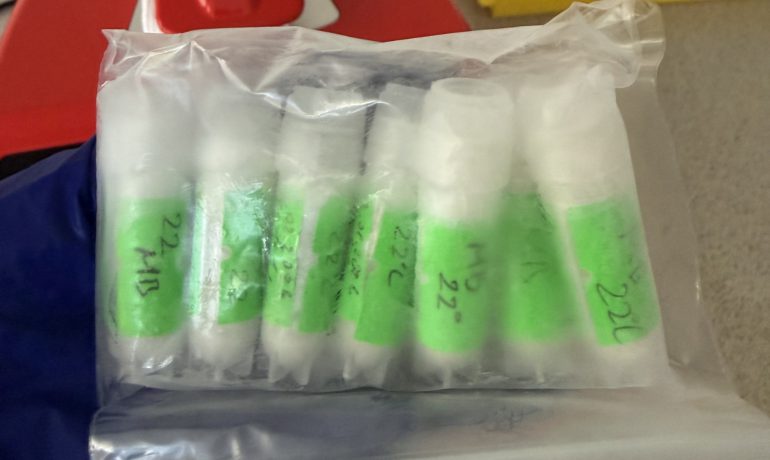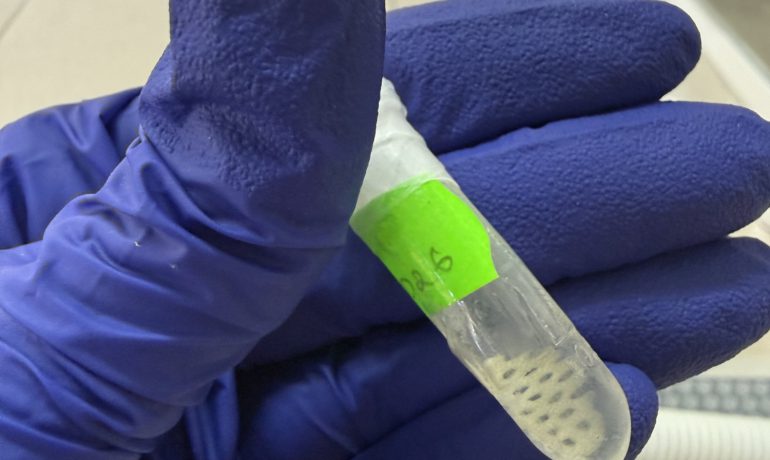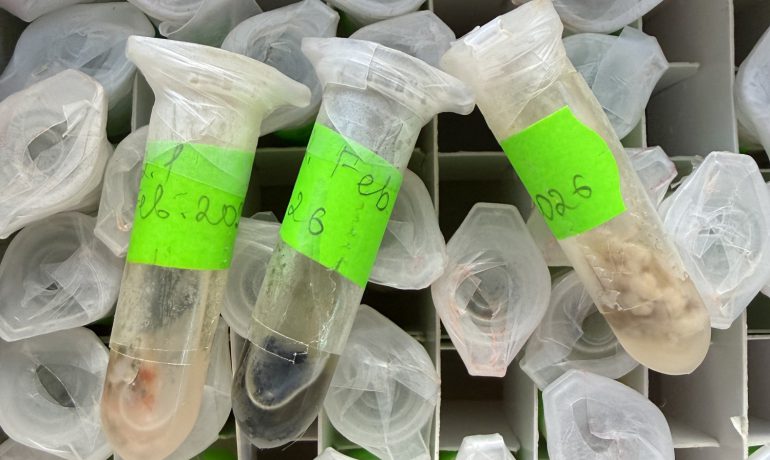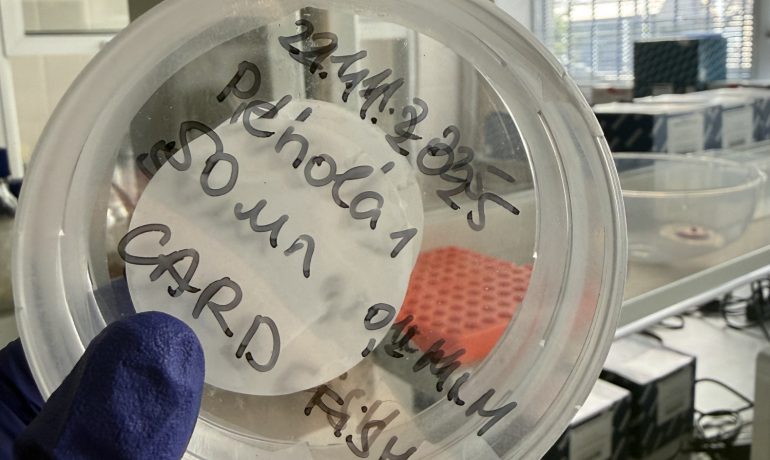

This year, the team from the 30th expedition and the seasonal team brought back a record number of samples from Antarctica—more than 3,000. They are very diverse.
They include over a thousand marine bacterioplankton samples. There are also samples of plants carried by birds, nesting material, zooplankton and phytoplankton, terrestrial invertebrates, nematodes, algae that cause snow bloom, mosses, sediment, and more.
Some samples were collected throughout the year; others were collected during the summer season. This is an enormous amount of work for both the expedition members and those who will process and analyze the material. The samples will be studied in detail in laboratories both in Ukraine and abroad. And this may take more than a year.
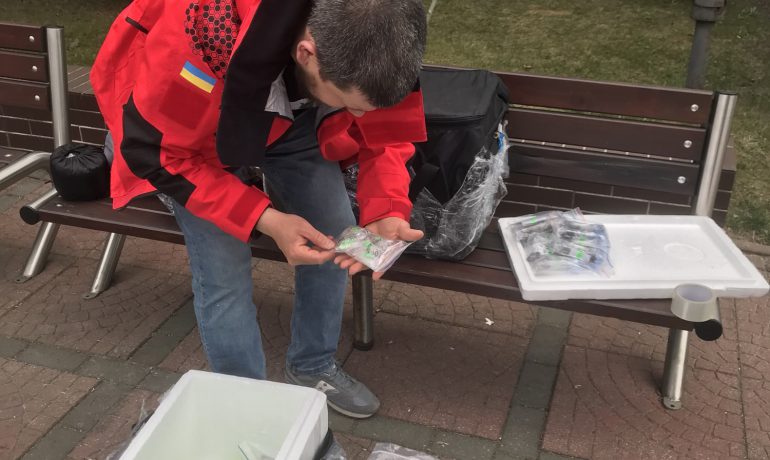
But first, the samples had to be transported frozen from the “Vernadsky” base to Ukraine. This is no easy task, as the journey is quite long.
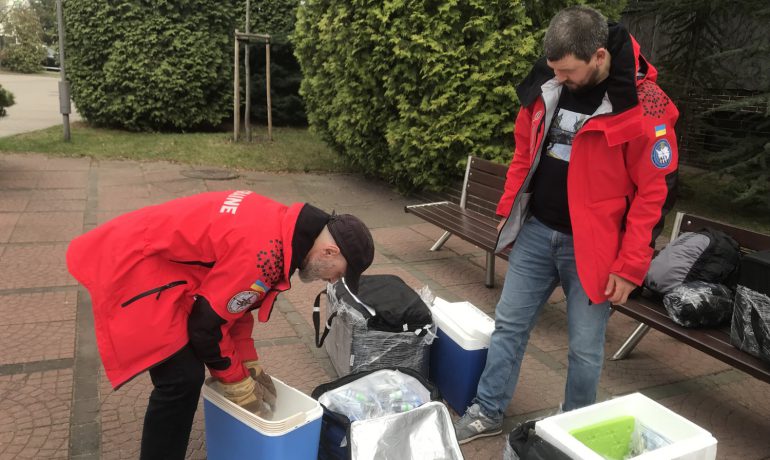
First, they went into freezers on the r/v “Noosfera,” then had several flights with cooling elements. And in Warsaw, dozens of kilograms of ice had to be added urgently so the samples could withstand the long bus journey to Kyiv.
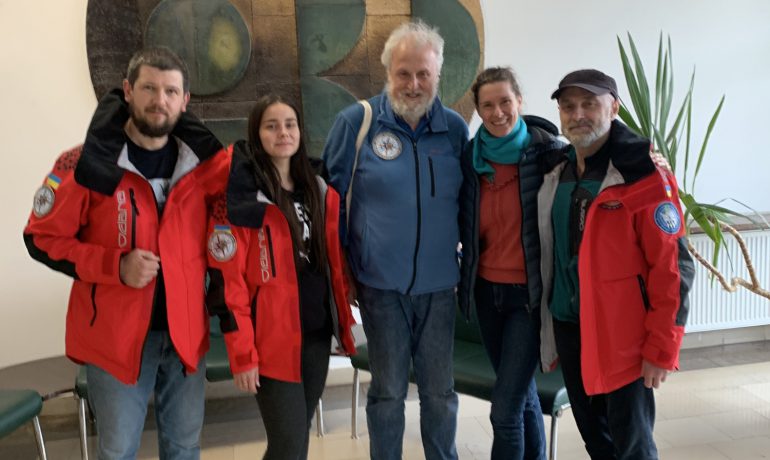
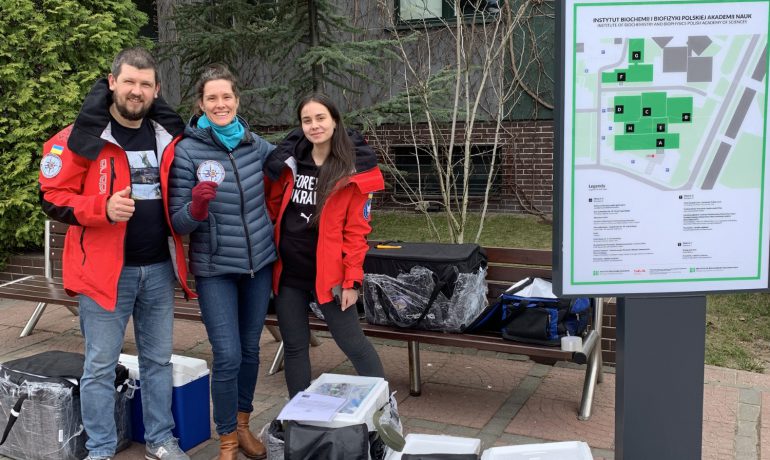
Upon arrival, colleagues from the Institute of Biochemistry and Biophysics of the Polish Academy of Sciences met our colleagues and brought 30 kg of dry ice prepared in advance. This is exactly how “polar solidarity” works, as scientists from other Antarctic nations understand the complex logistics involved.
This is far from the first example of assistance and successful cooperation between the Institute of Biochemistry and Biophysics and the NASC. At the start of Russia’s full-scale invasion of Ukraine, it was this very institute that sheltered the winterers of the 27th expedition, for whom new tickets from Warsaw to Punta Arenas were urgently sought to replace the cancelled ones from Kyiv.
At the same time, this same institution terminated its contract with the Russians to charter their vessel for the expedition’s rotation at the Polish Antarctic station “Arctowski” and offered our “Noosfera” logistical cooperation. This mutually beneficial cooperation has been successfully ongoing for five seasons now.
“So, despite all the logistical difficulties—both the ‘normal’ Antarctic ones and the additional ones caused by the war—thanks to the efforts of our scientists and international polar solidarity, the scientific ‘haul’ of the 30th expedition was the largest in all years. And this is far from the end of the work—after all, the real discoveries are still ahead, as this ‘haul’ is processed at two dozen universities and institutes,” noted NASC Director Evhen Dykyi.
Photos: Taras Peretyatko, Maria Pavlovska