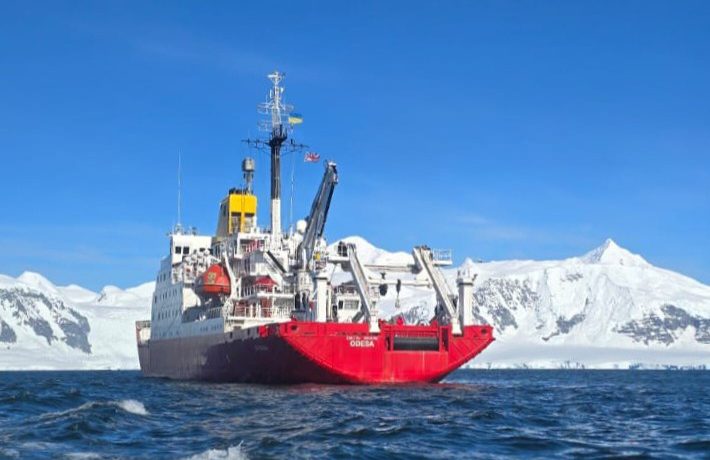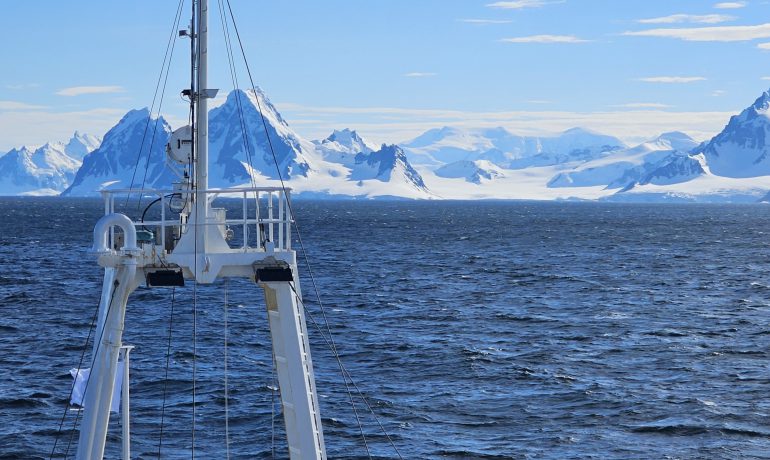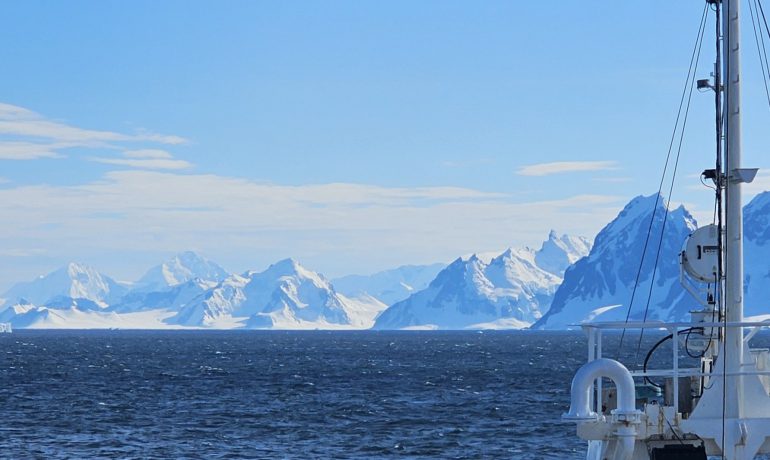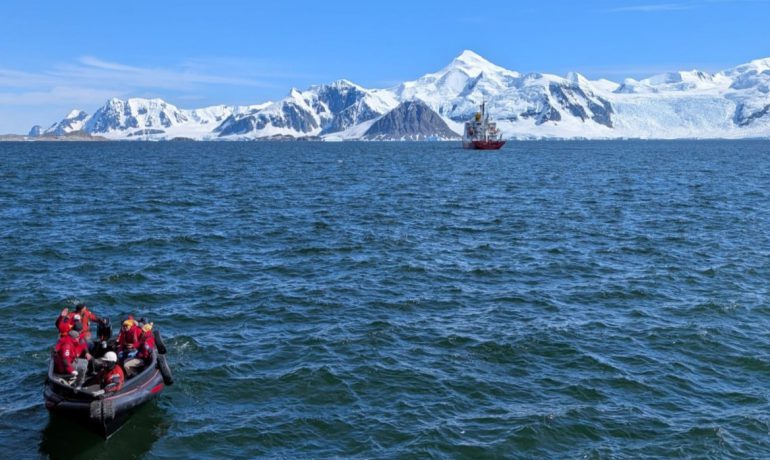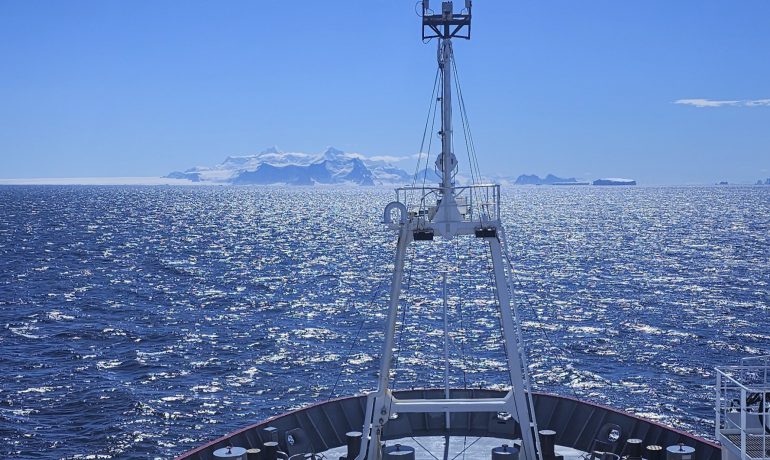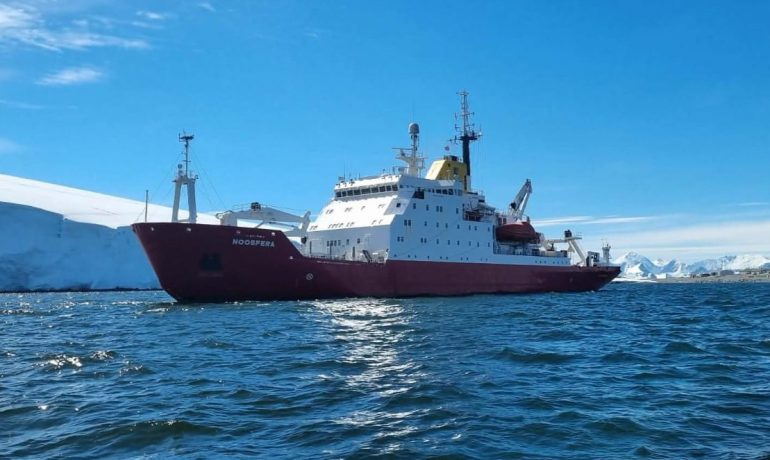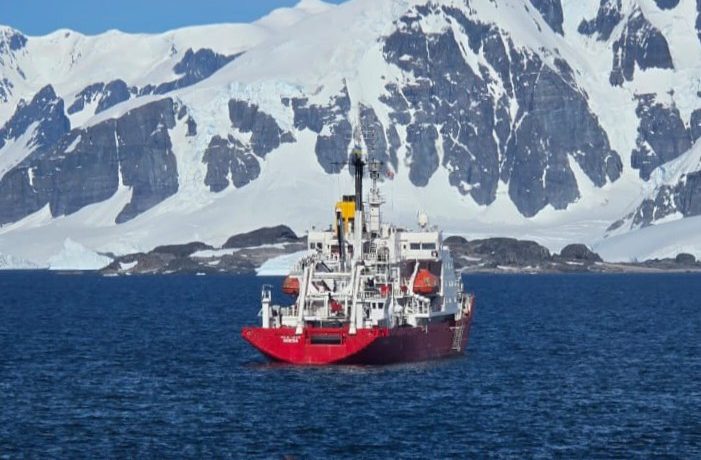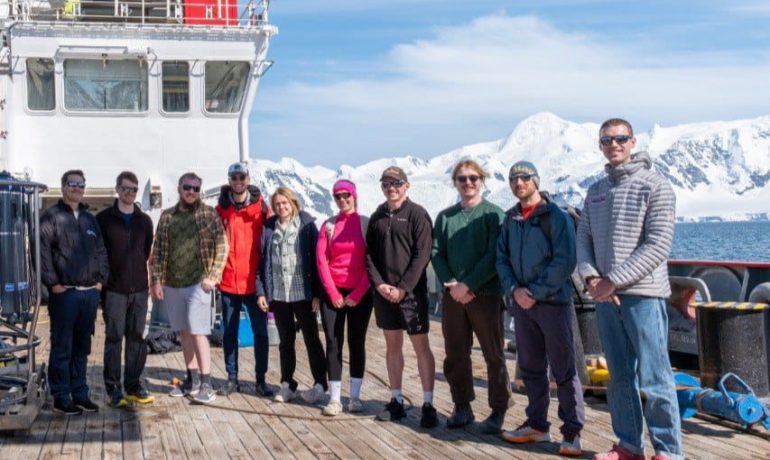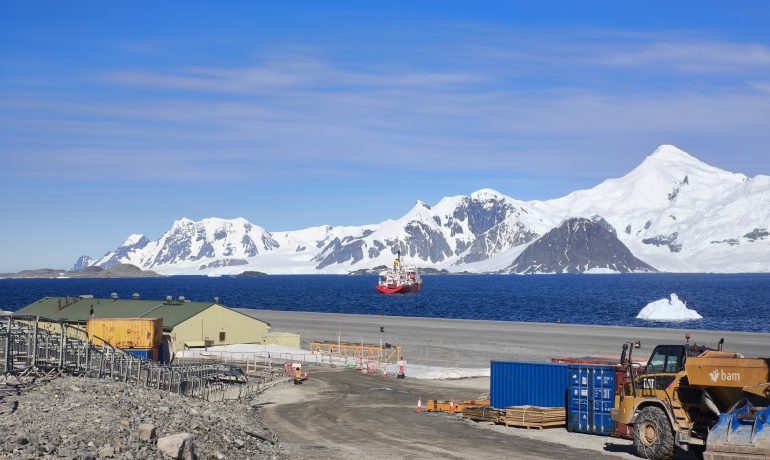

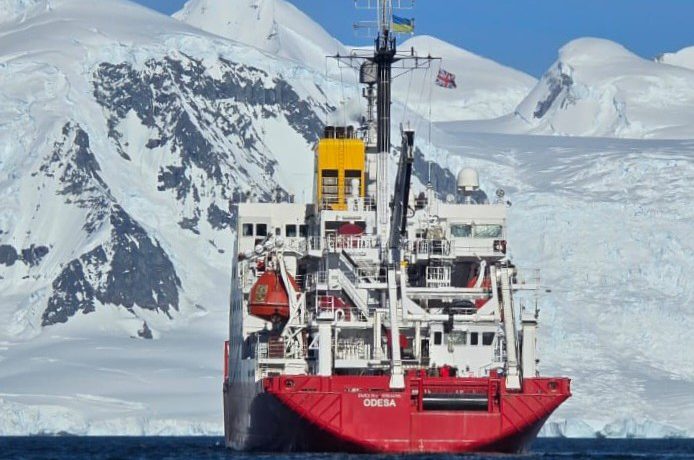
Since December 11, the Ukrainian ice-class RV Noosfera has been operating for the first time south of the Antarctic Circle. There, the vessel provides international oceanographic and geological research.
A polar circle is an imaginary line of latitude, either the Arctic Circle (North) or the Antarctic Circle (South), located at approximately 66.5° (66°33′) from the equator, marking the edge of polar regions where, for part of the year, the sun doesn’t set (midnight sun) or rise (polar night) at least once annually due to Earth’s axial tilt
We remind you that our Antarctic Akademik Vernadsky station is located north of the Antarctic Circle.
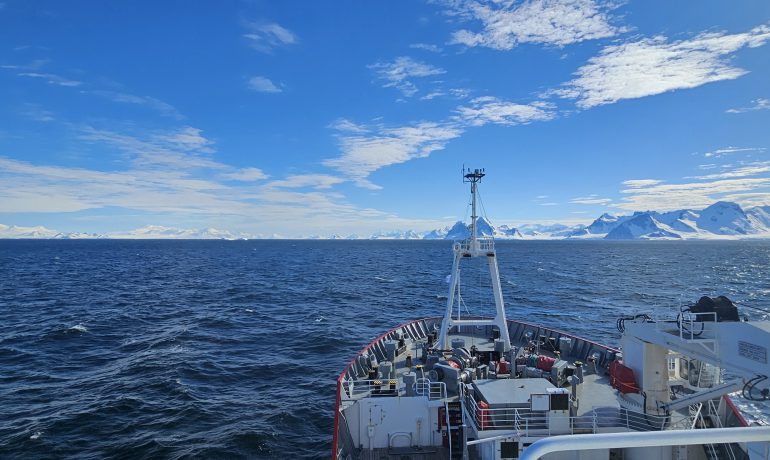
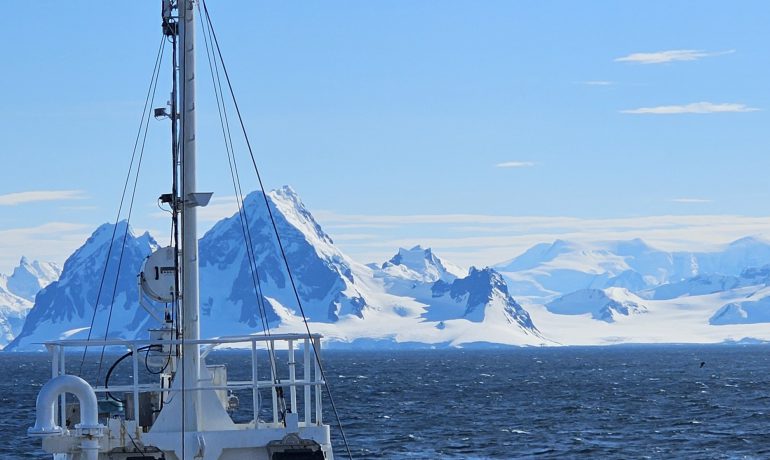
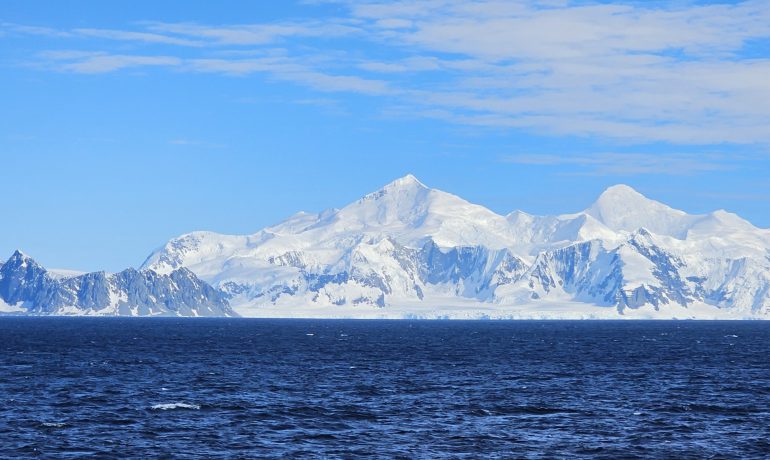
It was from here that the Noosfera’s route to the icy South began – across the Antarctic Circle, Margaret Bay on the west side of the Antarctic Peninsula to the British Antarctic Rothera Research on Adelaide Island.
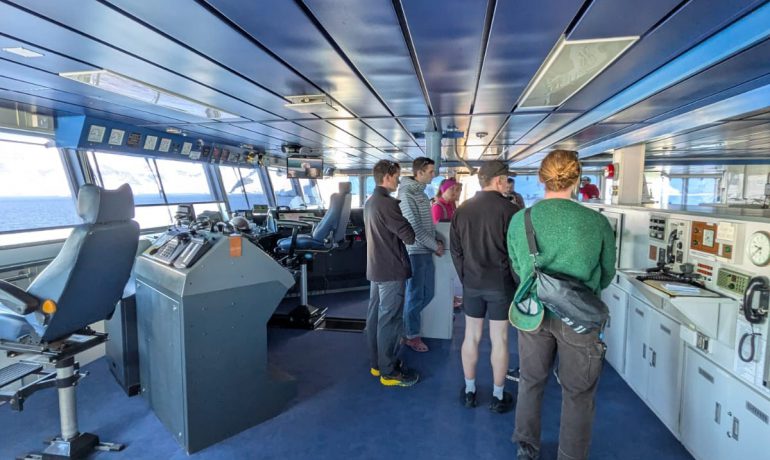
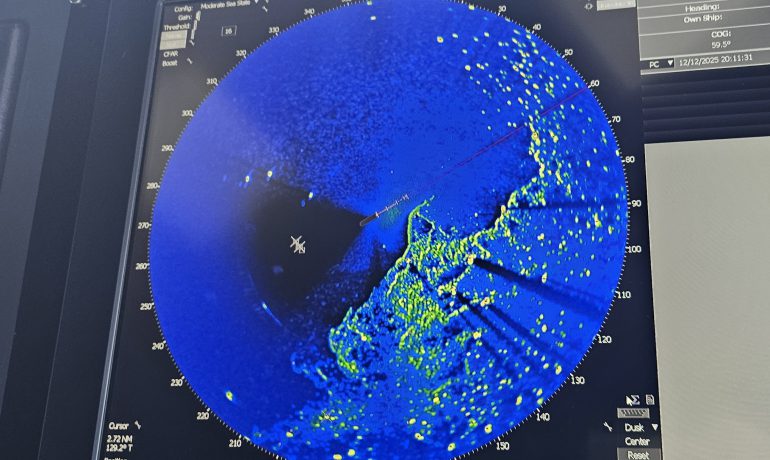
The icebreaker’s captain, Andriy Starish, shared: “On the way, we had to maneuver between icebergs for more than two hours.” It’s totally guesswork. that requires significant experience and a good understanding of the vessel’s navigational capabilities.
Along the way, oceanographers searched for marine heat waves, which periodically occur as a result of global warming even in the cold waters of Antarctica. To more accurately locate the climate anomalies, acoustic equipment was used to map the seabed.
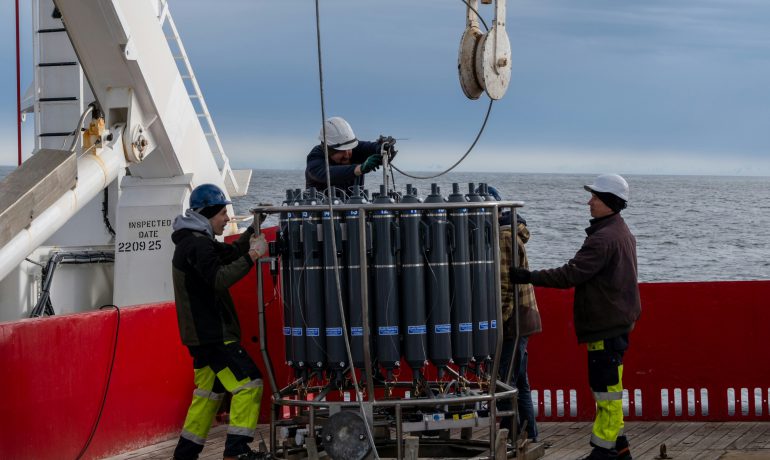
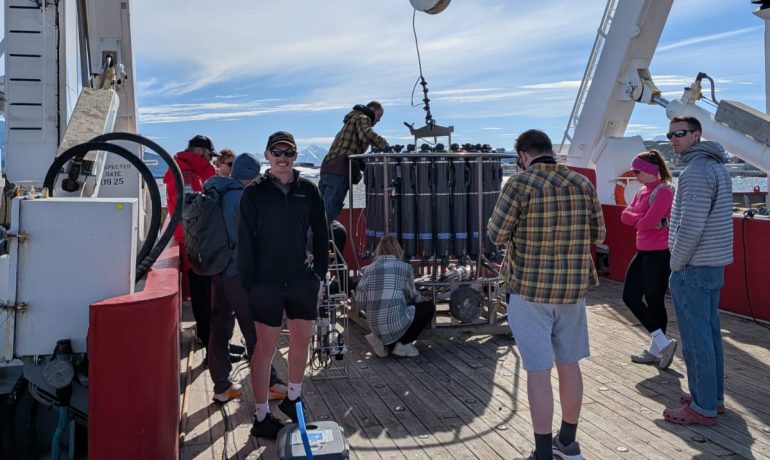
Then, using a special CTD (conductivity, temperature, depth) probe, scientists measured temperature, salinity, sourness, and acidity at 12 points in the ocean, and also analyzed chemical and biological indicators.
The results were quite unexpected, but we will talk about them after the study is completed.
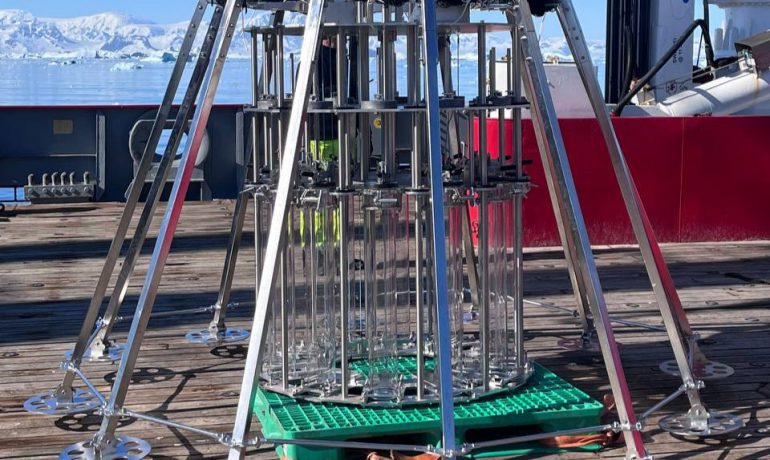
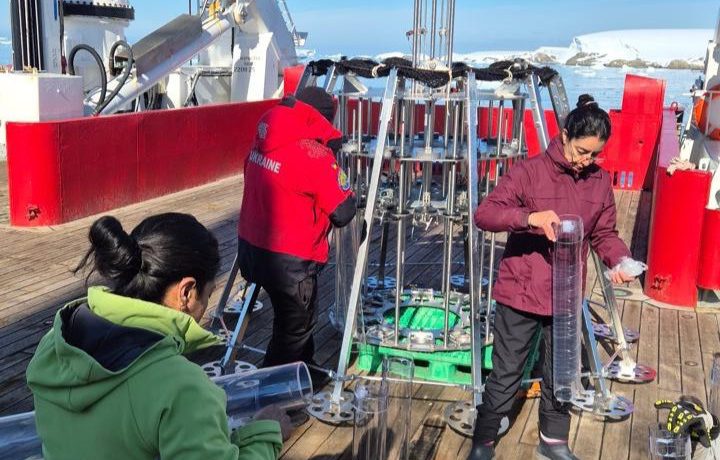
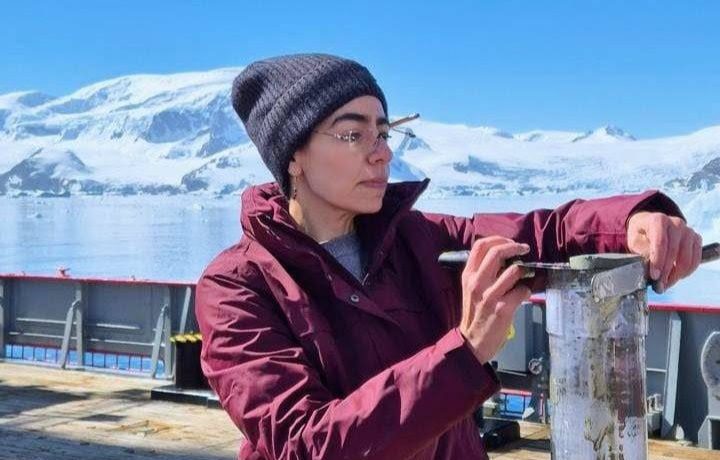
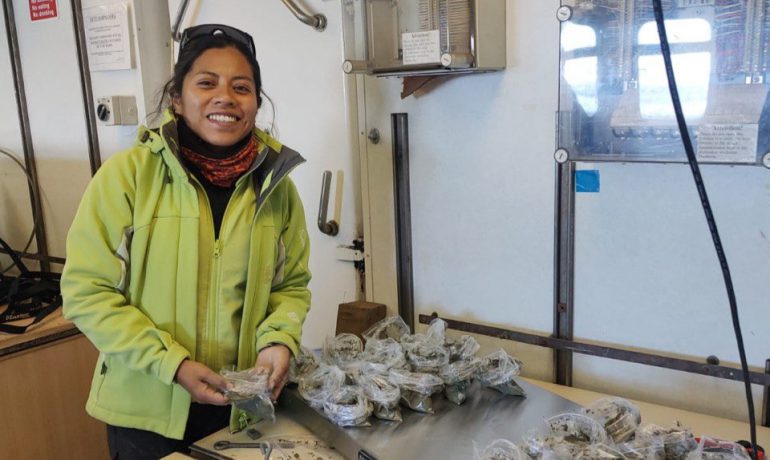
Ukrainian and Mexican geologists also collected sediment samples using a multi-corer (a device that presses a series of tubes into the seabed). Their analysis will provide a better understanding of how the climate has changed over the past hundreds and thousands of years.
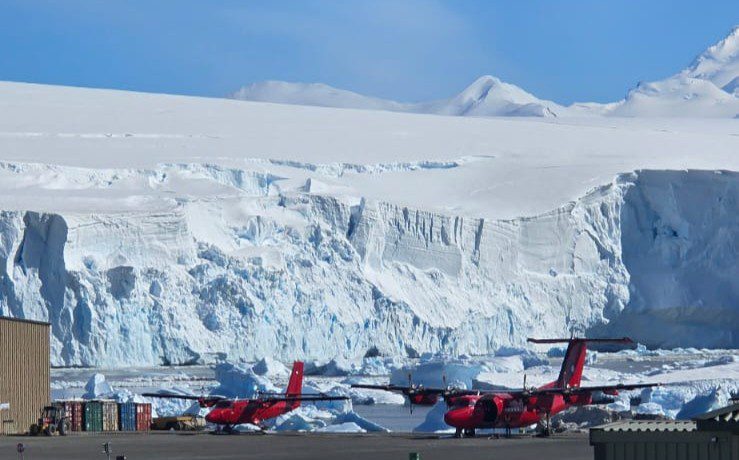
In addition to their work in the ocean, the scientists visited Rothera, the UK’s largest Antarctic station, where up to 100 polar explorers work in summer time and 22 in winter. They discussed opportunities for joint research, which is planned to begin this season.
By the way, right now the temperature near Rothera is the same as in Ukraine: from +1 to -2 C (although it is summer in Antarctica, and winter in Ukraine).
Now the return journey of Noospfera to Vernadsky begins, where research will also continue. We wish the team good weather and a safe return.
Фотографії: Andriy Starish and RV Noosfera crew, Nataliia Dikul, Laura Almaraz.